
Wednesday, April 8, 2009

Pulte Homes, Centex Join Homebuilding Forces

Companies merge in housing slump
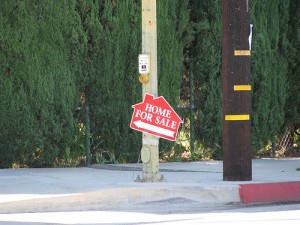
signPulte Homes Inc. has purchased Centex Corp. The two homebuilders will both benefit from joining their assets now, as the United States is in the worst housing slump since the ’30s. Pulte bought Centex for $1.3 billion in an all-stock deal. The companies now share $1.8 billion in net debt.

Too many builders

Both companies’ boards approved the pourchase.

"This is really good because not only are there too many homes, there are too many homebuilders," said Vicki Bryan, a senior high-yield bond analyst for New York-based Gimme Credit LLC. "Cash is king and this gives them $3.4 billion, the most in the industry, which means they don't need the banks."

Hopefully that means the companies won’t have to rely on short term loans to stay in business until the housing market picks up.

Need for change

New home sales are down 75 percent since July 2005. Sales rose in February, and Pulte Chief Executive Officer Richard Dugas hopes that change in direction plus the acquisition of Centex will return the company to profitability.

Merger motivation

In the past year, Centex has lost 70 percent of its value. Pulte suffered, too, losing 30 percent of its value. Fixed mortgage rates in the U.S. are at record lows, and home prices are still falling. Neither Dugas nor Centex CEO Timothy Eller is predicting a turnaround for the industry, but Dugas said “We’re cautiously optimistic about what we’re seeing now.” ... click here to read the rest of the article titled "Pulte Homes, Centex Join Homebuilding Forces"


Tuesday, April 7, 2009

GM Segway Part 2 | More Opinions on PUMA

‘Today Show’ takes a test drive

segwayGM and Segway have partnered to make a tiny, electric vehicle, the PUMA, that more closely resembles a scooter than a car. I shared my outsider’s opinion in Part 1 of this article, but there are plenty of other people out their sharing their thoughts.

This morning on the “Today Show,” a developer gave show host Meredith Viera a test drive in the passenger seat. Check out the video at Kicking Tires.

Word from the inside

As Viera rode around in the PUMA (Personal Urban Mobility and Accessibility), she had a few insights of her own to share. She commented that she wouldn’t feel safe riding in the PUMA in the streets. She also said they’d need to create an enclosed version in order for people to use it in the winter.

The driver of the PUMA, called “Mike the engineer” in the video, said it was a very early prototype and more safety features would be developed. GM executive Larry Burns said the vehicles will be “fully designed and test-driven” by January. It sounds like it will take more than a payday loan to buy one, though. The vehicles will cost up to a third as much as an average car.

Harsh words from Business Pundit

Though Burns sounded enthusiastic about developing the PUMA, some business analysts don’t think this risky venture is best for a company living on a government lifeline. ... click here to read the rest of the article titled "GM Segway Part 2 | More Opinions on PUMA"

SAT Scores Optional At Some Colleges?

What’s your score? Do I care?

SAT scores are coming out soon (or have already been released, depending upon when you read this). This brings thoughts of the future to millions of American high school students. Nervous feelings, excitement, expectation, even dread may color the pallet of days. What will the score mean for their college and career prospects? Does a high score ensure success in life? Does it make it easier to obtain a cash advance? Do all colleges still care about SAT scores?

No.

Jeremy Rodriguez reports for Carnegie Mellon’s The Tartan Online that an increasing number of colleges are ready to consider SAT scores optional in the admissions process.

Change the game

Thomas Espenshade and Chang Young Chung, a sociology professor and statistical programmer from Princeton University, have conducted a study that found that “dropping standardized test scores as an admissions requirement will lead to increased percentages of minority and socioeconomically disadvantaged students admitted to college.”

Clearly, it’s a story we’ve heard before, at least anecdotally. In the modeling for the study, researchers assumed that at the SAT-optional colleges, those with high scores would still apply there and receive the benefits of their scores. There are no advantage for high SAT scores at institutions that don’t use the scores in the admissions process.

Hooray for handouts

In the SAT-optional model, private colleges where applying black students with a mean SAT score of 1405, the percentage of admitted applicants who are black would increase by three percent. In an environment where the SAT was not considered at all, the percentage of accepted students goes up almost six percent. For Latino students, the numbers are three and four percent. ... click here to read the rest of the article titled "SAT Scores Optional At Some Colleges?"

GM PUMA | Is General Motors Grasping At Straws?

GM partners with Segway Inc.

puma1The United State’s biggest automaker and the creator of Segway scooters have teamed up to create the GM PUMA , a two-wheeled electric vehicle. So far the Puma is only in the prototype stage.
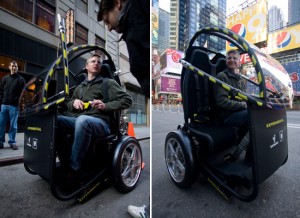
Perhaps this “sit-down scooter” or GM Segway, as some people are calling it, could be the next big thing in automotive technology. However, most market watchers are predicting the PUMA (Personal Urban Mobility and Accessibility) will be just was big a flop as the Segway scooter.

About the PUMA

The prototype was unveiled today in Manhattan. The vehicle weighs 300 pounds, runs solely on electricity and basically looks like a sit-down, shielded Segway. It has no safety features, but the makers say such features are unnecessary because the vehicle automatically avoids obstacles, pedestrians and other cars.

The PUMA’s top speed is 35 mph, and its top distance on a single charge is 35 miles.

PUMA price

It’s tough to say whether you’ll need a personal loan to buy a PUMA, if it ever does come out.

“The companies did not release a projected cost for the vehicle, but said ideally its total operating cost — including purchase price, insurance, maintenance and fuel — would total between one-fourth and one-third of that of the average traditional vehicle,” according to the Huffington Post.

So I guess the projected price depends on  your opinion of what an “average traditional vehicle” is.

Predictions of a non-expert

pumaIn my unprofessional opinion, any time or money that GM has spent on this vehicle during its time of economic crisis is a huge waste. I applaud the automaker for developing a vehicle that doesn’t use fuel, takes up less space and costs less than its other products, but the GM PUMA will never catch on. ... click here to read the rest of the article titled "GM PUMA | Is General Motors Grasping At Straws?"

Goodbye numbers, hello QWERTY

The entire world is invited to a retraining course

sidekick 3 vs mda - make reviewLast week, after much deliberation on the matter, I applied for and received an Online Cash Advance. This was no frivolous action. All my life I have managed to stay just over the red line of solvency and I cannot remember ever having resorted to a loan. But my cell phone died one evening; rolled over onto its back and gave out a weak off-key rendering of the Nokia tune and closed down forever. I poked around inside it with a paper clip but to no avail.

I took the loan money and went into my cell phone provider for something new to replace my old phone. I came out with a shiny black third generation model with a camera. So far, I've taken a lot of pictures and made zero calls.

This morning I open the paper over breakfast and find a most distressing article.

What’s QWERTY?

“Goodbye, numeric cell phone keypads. You’re going the way of the rotary dial. Touch screens and QWERTY keyboards will take over from here, thank you.” At North America’s largest cell phone trade show, running this week in Las Vegas, there were few new phones for the U.S. market that had a numerical keypad instead of an alphabetic keyboard. Touch screens also were out in force.

These changes are recognition of the popularity of text messaging and wireless Internet use. The industry organization CTIA Wireless, which hosts the show, said U.S. subscribers sent 1 trillion text messages last year, three times the 2007 volume. Meanwhile, the same people used 2.2 trillion minutes of voice calls, an increase of less than 5 percent. ... click here to read the rest of the article titled "Goodbye numbers, hello QWERTY"

Monday, April 6, 2009

Revolution Money Challenges Credit Cards, PayPal

A revolution in money

We’re all looking to cut costs. Consumers are trying to spend less, even if it is contrary to how the economy receives greatest stimulation. When people shop for payday loans, they’re looking for low cost. When merchants want to cut costs, they look at expenses and see where savings can be had.

Ty McMahan reports for the Wall Street Journal that major financial firms and investors have contributed $42 million in venture capital into Revolution Money, a payment-processing company backed by AOL co-founder Steve Case.

What do they do?

Revolution Money cuts costs by providing an online portal through which merchants can accepting credit card payments. The cost is decreased for merchants by up to 75 percent for transactions, and the merchants can then pass part of that savings on to consumers as lower prices for goods. The company expects to steal market share from both traditional credit card companies and payment services like PayPal. According to reports, the post-money valuation (after investment has been made) of Revolution Money is less than $200 million. ... click here to read the rest of the article titled "Revolution Money Challenges Credit Cards, PayPal"

Thursday, April 2, 2009

FASB: Taxpayers Should Feed Banks More (Pt. 2)

But that’s not all

(This concludes my look at what the FASB has done. CLICK HERE if you missed the opening)…

The FASB is also going to allow companies to list impaired assets like mortgage securities in their books as “other comprehensive income.” This improves operating income by allowing companies to report smaller loss amounts on their financials. So long as the company discloses quarterly their justification for listing assets in this category, it will be considered appropriate.

Columbia Business School Accounting Professor Robert Willens sees this new provision upping companies’ earning statements by 20 percent on average. Yet large banks like Citigroup Inc. would sop up much of this revaluation profits because they are carrying much many more toxic assets than smaller banks.

And bankers want even more

Bankers are also lobbying for the FASB and the SEC to receive retroactive compensation for their impaired illiquid assets. House Financial Services Committee Chairman Barney Frank told the American Bankers Association he will present their proposal to the SEC and Congress. However, Willens finds the idea very unusual.

“FASB doesn’t traditionally do that, but Frank’s pressure could make it happen,” he said.

What does this mean to taxpayers?

The prognosis isn’t good. Looking at the responses to the article, “JoeHunt” provides a good yardstick:

Honestly, how can anyone believe this rubbish? Show me a strong, dependable cash flow and I’ll show you a market and investors willing to pay market value for the discounted cash flow. In this market especially, I’d dump my entire portfolio into something with a dependable cash flow. WAKE UP folks, the problem is these future cash flows are “pie in the sky” or the actual dependable cash flow is way under book value, so the assets do not exist at these prices and that’s why there’s an illiquid market, the lapse of mark to market is an utter robbery. ... click here to read the rest of the article titled "FASB: Taxpayers Should Feed Banks More (Pt. 2)"